FIRAT YUSUF YILMAZ
The international human rights organization Freemuse, which advocates for artistic freedom, has released its annual global report documenting restrictions on artists and cultural expression across Latin America, Africa, Europe, South Asia, and other regions throughout 2025. Widely cited by governments, United Nations agencies, academics, and cultural institutions, Freemuse’s annual reports are considered among the leading references on the state of artistic freedom worldwide. More than catalogues of individual violations, they offer a broader picture of how global political transformations are reshaping cultural life across the globe.
 In this article, I take an in-depth look at Freemuse’s The State of Artistic Freedom 2026, which examines the state of artistic freedom in 2025 and includes a dedicated assessment of Turkey. Before turning to the report itself, however, it is worth revisiting some of the year’s defining social, political, and cultural developments that shaped the context in which it was produced.
The year 2025 was marked by wars, mass protests, and intensifying cultural debates. In Gaza, the ongoing war also damaged numerous cultural heritage sites, museums, libraries, and arts institutions. The Israel-Iran conflict in June heightened political tensions across the region, while people in conflict zones such as Sudan, Ukraine, and Myanmar continued to live under immense pressure. At the same time, mass student protests in Serbia, youth-led movements in Kenya, and anti-government demonstrations in several countries stood out among the year’s major social developments. In the cultural sphere, exhibitions expressing solidarity with Palestine were cancelled, festivals accused of ignoring the issue faced boycott calls, and several institutions were shaken by internal crises. The spread of AI-generated works also brought copyright disputes to the fore. Meanwhile, in Afghanistan, the Taliban’s bans targeting musicians and women’s participation in cultural life remained in place, while censorship, freedom of expression, and the public role of artists continued to be debated in Iran, Russia, Turkey, and many other countries.
The report argues that restrictions on artistic freedom have evolved far beyond isolated acts of censorship, becoming what it describes as a “structural and institutionalized regime” that permeates nearly every part of the cultural sphere. Even in countries widely regarded as democratic, institutional pressure, increasingly intrusive systems of surveillance, and systemic barriers are becoming ever more entrenched.
Another key finding of the report is that these mechanisms of repression increasingly extend beyond state institutions. Alongside restrictions imposed by public authorities, private institutions are frequently shown to adapt to –and, at times, reinforce– the same regime of institutional pressure. In this context, institutional claims of “neutrality” often emerge as a means of avoiding political risk, contributing to the depoliticization and isolation of the cultural sphere. Rather than merely becoming targets of repression, cultural institutions can themselves become active participants in sustaining it. As organizations adopt disengagement from public affairs as an institutional principle, the space for critical expression narrows and the social ties of cultural production is gradually weakened.
The report cites numerous examples. In the United Kingdom, art events related to Palestine were cancelled on “security” grounds. In Australia, artist Khaled Sabsabi faced efforts to strip him of his appointment as the country’s representative at the Venice Biennale over earlier works featuring Hezbollah leader Hassan Nasrallah and footage from the September 11 attacks. At the Venice Biennale itself, a South African project commemorating Palestine was halted, while across Latin America, events organized in solidarity with Palestine were removed or cancelled by various cultural institutions.
A second major finding of the report is that censorship increasingly operates not through outright bans, but by fostering a pervasive climate of fear that encourages self-censorship. The risk of losing funding, professional isolation, and public backlash all contribute to artists withdrawing from contentious subjects. At the same time, restrictions imposed in the name of “public order” or “social sensitivities” create a multilayered system of pressure that constrains artistic expression. Faced with the prospect of being targeted, investigated, or subjected to online harassment, many artists choose not to engage with certain topics in the first place. Religious groups, nationalist movements, and coordinated online outrage campaigns have likewise emerged as key drivers of this pressure.
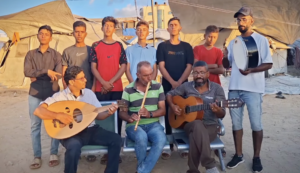
A screenshot from the YouTube channel of Ahmed Abu Amsha, a music teacher and guitarist who performs for children and adults in Gaza.
The report points to a number of examples. In the United Kingdom, Manchester’s HOME arts centre removed several Palestine-related events from its programme. In Germany, the political backlash surrounding Berlinale 2024 continued to reverberate throughout 2025, fostering a more cautious and tightly controlled climate for cultural institutions and public debate. In Iran, meanwhile, heightened security measures introduced during the war created an environment in which artists were increasingly accused of “collaborating with the enemy” or posing a threat to national security. As the report argues, repression does not operate solely through direct punishment. Even where artists are not prosecuted or imprisoned, its aftereffects are felt in the form of fear, shrinking spaces for expression, and the growing normalization of self-censorship.
One of the report’s most striking findings concerns the relationship between war and cultural destruction. Drawing on the cases of Gaza, Sudan, Ukraine, and Myanmar, it argues that contemporary conflicts also target collective memory. According to the report, museums, theatres, cultural centres, archives, and historic sites are increasingly subjected to destruction or irreparable damage. Sudan illustrates how cultural life becomes especially vulnerable under the combined pressures of war and authoritarianism. The looting of museums, theatres, and archives has not only disrupted cultural production but has also physically erased parts of the country’s cultural heritage. Gaza, meanwhile, stands as perhaps the clearest example of how cultural destruction can become a deliberate practice of memory erasure. For many months now, we have witnessed the cultural sphere becoming one of war’s direct targets.
The report also documents the global repercussions of the conflict. Artists and activists speaking out against the genocide have faced censorship well beyond the region itself. Concerts by artists expressing solidarity with Palestine have been cancelled, while others have been subjected to investigations, funding cuts, and institutional pressure. Together, these cases demonstrate that the cultural consequences of war extend far beyond the battlefield, reaching well beyond physical destruction to shape artistic expression and cultural life around the world.
Gender and queer expression under attack
Another major theme running through the report is the growing use of law as a tool of repression against the cultural sector. It devotes considerable attention to the concept of “lawfare,” examining how anti-terrorism legislation and national security laws are increasingly used to criminalize artistic and cultural expression. As the report notes, it is significant that similar patterns emerge across very different political contexts, including Turkey, Iran, Russia, Myanmar, and the United Kingdom.
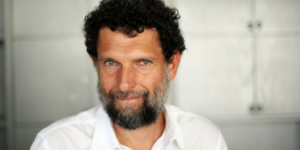
Osman Kavala
The report points to a range of cases illustrating this trend: the prolonged imprisonment of Osman Kavala in Turkey; the prison sentence handed down to Kurdish musician Pınar Aydınlar; the prosecution of protest musicians in Iran; and investigations in the United Kingdom into musicians who publicly expressed support for Palestine. Despite their differing political systems, these cases reveal a strikingly similar reliance on the language of national security. By accusing artists of “terrorist propaganda,” “extremism,” or “incitement,” governments increasingly recast political dissent as a matter of internal security.
The report also highlights the impact of so-called “foreign agent” laws on cultural life. Artists and cultural organizations receiving international funding are routinely branded as “foreign agents,” “traitors,” or proxies for outside powers. Such measures not only stigmatize independent cultural work but also criminalize international solidarity, reinforcing what the report describes as a “regime of cultural isolation.” In doing so, it argues, the boundary between cultural policy and political control becomes increasingly blurred, allowing the climate of repression to expand even further.
Restrictions on gender and queer expression also feature prominently in the report. One of the principal legal justifications for such restrictions is the criminalization of acts deemed to insult religion or offend sacred values. Across many countries, official rhetoric invoking “family values,” “morality,” and “public order” has increasingly been deployed to curtail LGBTQI+ expression and visibility.
In this context, it is worth recalling that 2025 was declared the “Year of the Family” in Turkey. The government’s framing of LGBTQI+ identities as a threat to the family and to the social order echoes broader cultural policy trends seen in countries such as Russia and Hungary, even if the mechanisms of repression differ. In Russia, legislation targeting LGBTQI+ visibility has placed queer cultural production and artistic events under broad restrictions. In Hungary, Pride marches have been banned and LGBTQI+ people have been systematically pushed out of public life. In Slovakia, public funding for LGBTQI+-themed cultural events has been withdrawn, while in Turkey, LGBTQI+ festivals and even film screenings continue to face bans.
The report also highlights Afghanistan as one of the starkest examples of gender-based repression in the cultural sphere. Under Taliban rule, women are prohibited from singing and are effectively barred from participating in artistic and cultural life, illustrating the extreme consequences of policies aimed at erasing women’s public presence.
The report also devotes significant attention to the contradictory nature of the digital sphere. While platforms such as TikTok, Instagram, and YouTube have opened up new spaces for artistic expression, they have simultaneously become sites of continuous surveillance and control. In particular, the rapid spread of satire and political humor on social media is increasingly perceived as a threat by authoritarian governments. The arrest of a dancer in Tanzania for satirizing the president and the detention of a singer in Togo under similar circumstances point to a growing pattern of digital repression.
The report identifies music and film –two art forms most closely connected to digital platforms– as among the sectors facing the greatest pressure. Rappers, documentary filmmakers, and independent directors have become frequent targets of censorship, prosecution, and intimidation in many countries. One reason, the report suggests, may be these forms’ unique capacity to generate “collective emotional responses,” circulate rapidly, and contribute to the formation of political memory. The report cites several examples, including investigations in the United Kingdom into rap groups that expressed support for Palestine, the life sentence imposed on Myanmar documentary filmmaker Shin Daewe, and mounting pressure on independent filmmakers in Iran. Together, these cases illustrate how digital visibility has become a catalyst for intensified state repression.
A clear shift in political framing emerges when comparing Freemuse’s reports covering 2024 and 2025. One notable difference is the prominence given to data from V-Dem (the Varieties of Democracy Institute), whose democracy index is among the world’s most comprehensive measures of democratic governance. Citing V-Dem, the report notes that democratic standards worldwide have fallen back to levels last seen in the 1980s. While Freemuse’s 2024 report largely took the form of a human rights survey documenting violations of artistic freedom, the 2025 edition situates those violations within broader processes of democratic backsliding, armed conflict, and the expanding reach of state surveillance and control. In this sense, the report moves beyond documenting individual abuses to examine how the cultural sphere itself is being reshaped under conditions of authoritarianism.
This shift is also reflected in the report’s emphasis. The 2024 edition focused primarily on specific cases of censorship, whereas the 2025 report places greater weight on analyzing the broader impact of war on cultural life. Through the examples of Ukraine, Sudan, and Iran, it explores how armed conflict fragments cultural ecosystems and turns artists into direct targets of repression. Sudan stands out in particular, where the ongoing civil war has been accompanied by the looting of museums, archives, and cultural centres, while many artists have been forced into exile.
The report’s assessment of Turkey likewise illustrates this change in perspective. In the 2024 edition, the country was described as operating in a “tense environment.” By 2025, however, it is presented through the framework of “systematic censorship,” reflecting what the report sees as a marked deterioration over the course of a single year. Turkey is now cited as an example of a country where artistic expression has become overshadowed by systematic censorship. The report argues that the expansive interpretation of anti-terrorism legislation has produced a sustained regime of repression, exposing artists who participate in protests to detention, criminal investigations, and prosecution.
Cultural responses under pressure
Hundreds of arts organizations and professionals in the U.S. have signed a nationwide statement opposing censorship and institutional self-censorship. Illustration: Collective Courage.
The report, however, does not simply paint a bleak picture of mounting restrictions on artistic freedom. It also highlights the forms of solidarity and resistance that have emerged in response. Alternative cultural networks, support structures established by artists in exile, new exhibition formats, and digital strategies for disseminating artistic work all feature as examples of the shared spaces artists continue to create under conditions of repression.
In this sense, the report portrays artists not merely as victims of censorship, but as active agents who develop new forms of organization and participate in collective struggles. The experiences of Gaza, Iran, and Afghanistan illustrate how artistic production becomes deeply intertwined with acts of witnessing, remembrance, and the preservation of collective memory under conditions of repression. In Gaza, artworks created from the rubble of destroyed buildings and the use of music as a source of hope amid bombardment underscore the resilience of cultural expression. In Iran and Afghanistan, meanwhile, underground artistic communities continue to carve out alternative public spaces despite sustained repression.
The report also points to examples of resistance beyond conflict zones. Across Europe, artists have mobilized in support of a European Artistic Freedom Act, while this year’s Venice Biennale became the site of numerous protests over artistic freedom and the war in Gaza. Finally, as noted above, the case of Australian artist Khaled Sabsabi stands out. After he was stripped of his appointment to represent Australia at the Venice Biennale, sustained pressure from the artistic community and public criticism ultimately led to his reinstatement. The episode serves not only as an example of attempted censorship but also as a reminder of the power of solidarity and collective advocacy within the arts.
Freemuse’s latest report, therefore, does more than document the growing pressures on artistic freedom. It also demonstrates how culture and the arts bear witness to the profound transformations brought about by war, democratic backsliding, and the global rise of authoritarianism.
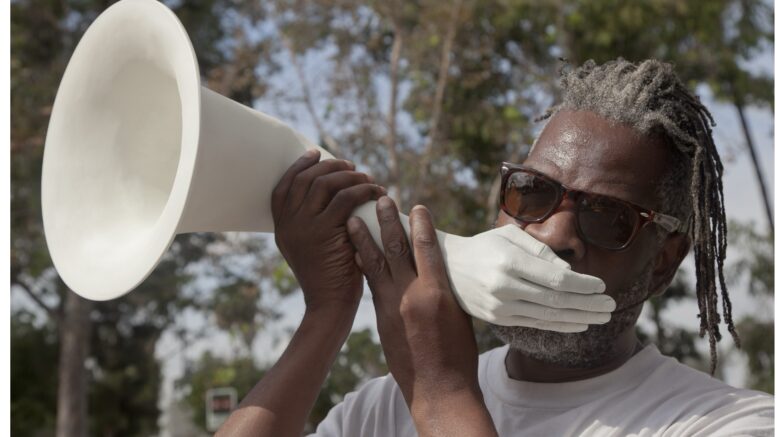
* Cover photo: The Video Call to Arms, a work exploring censorship and suppression that was itself censored by the administration of Pepperdine University in California.